
Hey there!
Let’s talk about multiplication facts. You know how it goes. You’ve got kids who can rattle off 9 x 8 without even looking up, and you’ve got kids still counting on their fingers for 4 x 4. And a lot of times, they’re all doing the same practice page.
That never sat right with me. My fast kids were bored, and my kids who needed help weren’t getting it. I needed a quick way to figure out where each kid actually was so I could give them the right practice. So I made a screener.
Why a Score Isn’t Enough
We’ve all given the timed test, counted them up, and put a number in the gradebook. But if a kid gets 40 out of 66, what does that actually tell you? Which ones did they miss? Is it the 7s? Is it everything?
And here’s the other thing. If a kid gets the right answer but had to count on their fingers to get there, they don’t really know that fact yet. They figured it out, and that’s great! But that’s not fluency.
I wanted to see both: what they know, and what they’re still figuring out.
What’s in the Screener
There are 66 multiplication facts split into four parts. I didn’t put them in order from 0s to 12s. I grouped them the way kids learn them:
- Part 1: Doubles and Tens
- Part 2: Fives and Elevens
- Part 3: Threes and Fours
- Part 4: Tricky Facts (yep, the 6s, 7s, 8s, and 9s)
So when you look at a kid’s paper, you can see right away which part they’ve got down and where they start to struggle.
Timed or Untimed? You Pick.
I get this question a lot, so I made it work both ways with the same pages.
- Untimed (8 to 10 minutes): I like this at the start of the year or for kids who get nervous when they see a timer.
- Timed: Use this when you want to see if they really know their facts fast, like before you move them to the next part.
There’s a little box at the top of the page to check off which way they took it. That’s it. No extra copies.
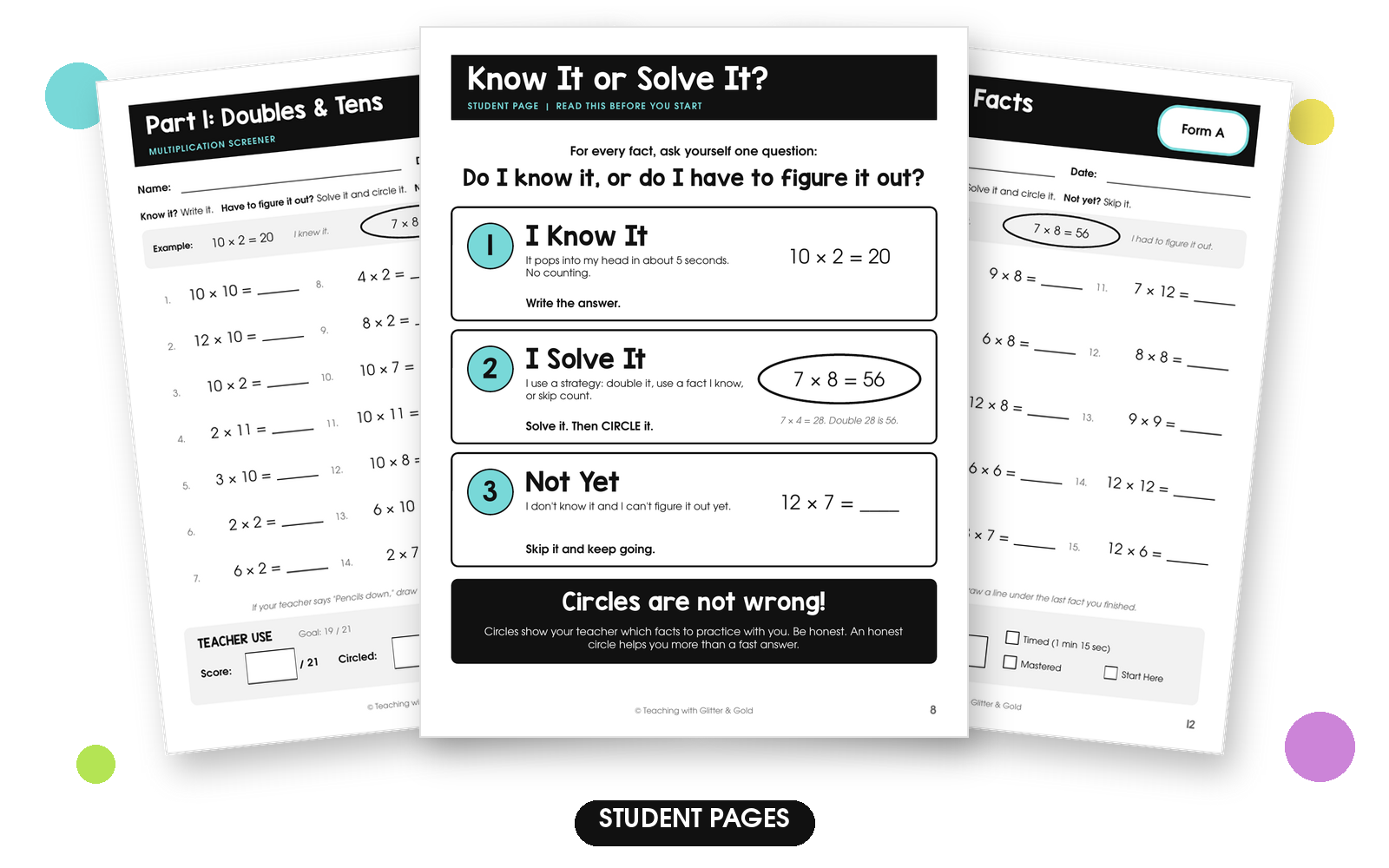
Know It or Solve It
This is my favorite part. Before kids start, I tell them: if you know it, just write it. If you have to stop and figure it out, that’s okay. Write the answer and circle the problem.
Circles are not wrong. Circles just show me which facts you’re still working on.
I say that every single time, because I want them to be honest with me. Those circles tell me so much. They show me the facts a kid can do but doesn’t know yet, and that’s exactly what they should be practicing.
Scoring It and Knowing Where to Start
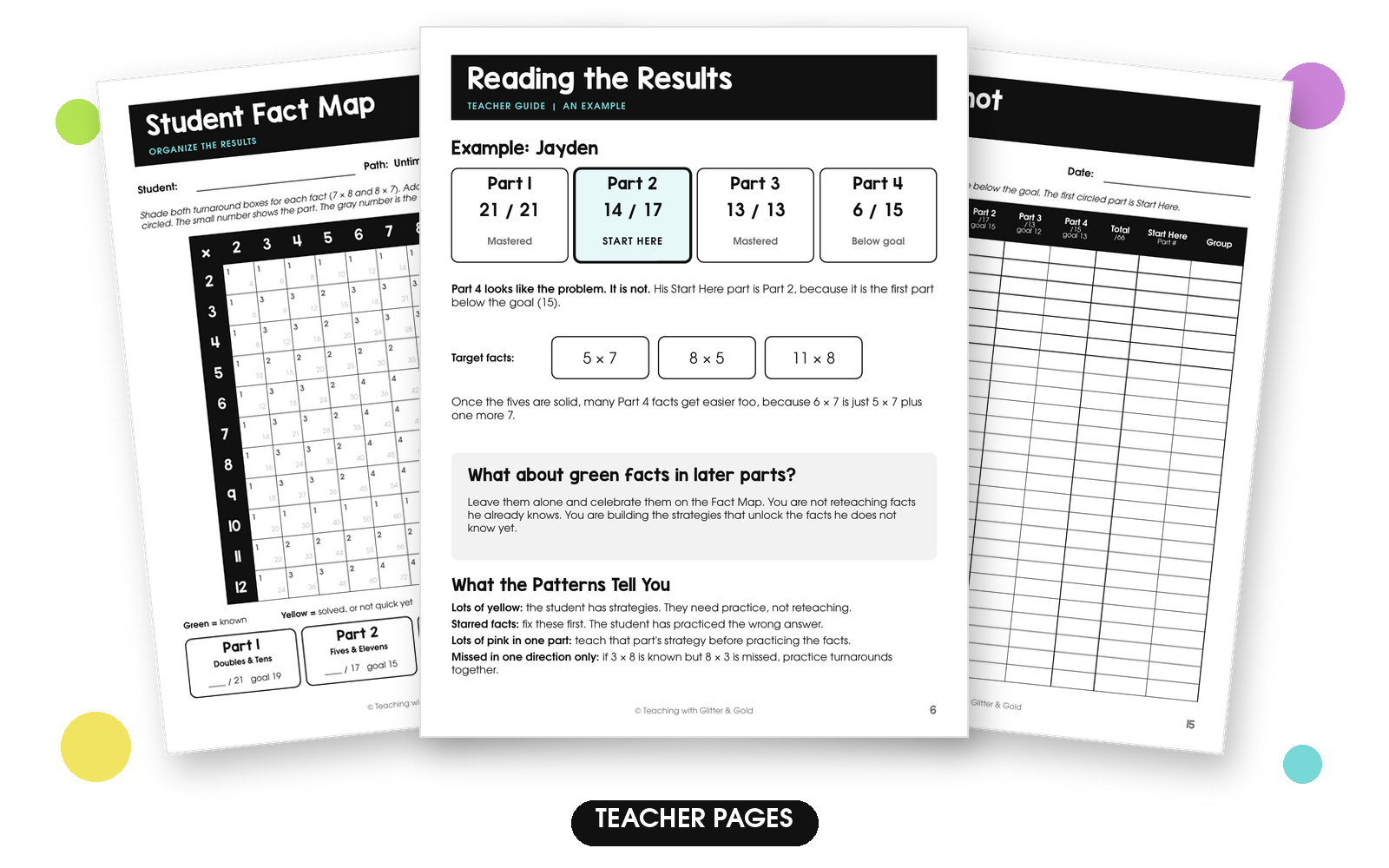
Scoring is quick. In each part, count the answers that are right and not circled. Then find the first part they haven’t mastered. That’s where they start.
Here’s an example. Say Jayden gets:
- Part 1: 21 out of 21
- Part 2: 14 out of 17
- Part 3: 13 out of 13
- Part 4: 6 out of 15
Your first thought might be, “Part 4! He needs Part 4!” And he does. But Jayden starts with Part 2. He still has a few fives and elevens to lock in, and those are quicker to fix. Once he’s got those, he’ll go into the harder facts feeling good instead of feeling stuck.
You also get a Fact Map, a Class Snapshot so you can see your whole class on one page, a Practice Group Planner, and a My Fact Goals page for kids to track their progress.
Grab It for Free
The Multiplication Screener (Form A) is free. It comes with the student pages, answer key, the teacher guide with the Jayden example, and all the recording pages. Just put in your email and it’ll come right to your inbox.
Already know where your kids are? Take my quick fact fluency quiz and I’ll point you to the practice that fits.
Our kids don’t all need the same thing, so their fact practice shouldn’t all look the same either. Find where they are and start there.
Happy teaching, friend!
Ashley